



Parasite
Antiparasitics are a class of medications which are indicated for the treatment of parasitic diseases such as nematodes, cestodes, trematodes, and infectious protozoa.
Parasite Isoform Specific Products
All Product Categories
-
Parasite Related Products (2528)
Related Products (2528)

-
Related Compound Screening Libraries (1)
-
Parasite Isoform Comparison
-
Emoquine-1
 0 ImagesCat. No.: HY-172131Emoquine-1 is an orally active and potent antimalarial drug. Emoquine-1 is efficient against multidrug-resistant Plasmodium parasites, including the Artemisinin-resistant quiescent stage. Emoquine-1 is active against proliferative P. falciparum with IC50 values of 20-55 nM. Emoquine-1 is a candidate to fight Plasmodium parasites resistant to artemisinin-based combination therapies (ACTs) with a capacity to eliminate persistent parasites.
-
Triclabendazole sulfoxide-d3
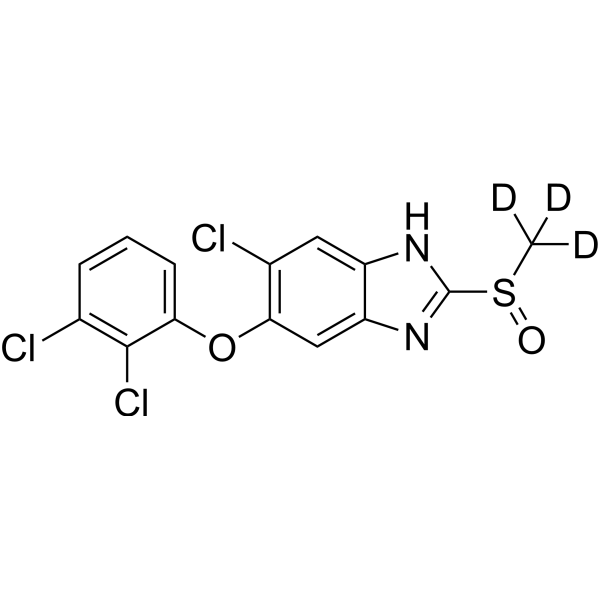 0 ImagesCat. No.: HY-136450SSynonyms: TCBZ-SO-d3Triclabendazole sulfoxide-d3 is the deuterium labeled Triclabendazole sulfoxide. Triclabendazole sulfoxide (TCBZ-SO) is an orally active ABCG2 inhibitor with antiparasitic activity. Triclabendazole sulfoxide inhibits ABCG2-mediated active efflux and ATPase activity. Triclabendazole sulfoxide increases the intracellular accumulation of Mitoxantrone (HY-13502). Triclabendazole sulfoxide reduces the apical-directed transepithelial transport of Nitrofurantoin and Danofloxacin, while increasing their basolateral-directed transepithelial transport. Triclabendazole sulfoxide elevates the plasma levels of sulfasalazine in wild-type mice. Triclabendazole sulfoxide decreases ABCG2-mediated secretion of Nitrofurantoin into milk in wild-type lactating mice. Triclabendazole sulfoxide can be used in the research of insecticidal agents and cancers such as breast cancer.
-
Anti-infective agent 4
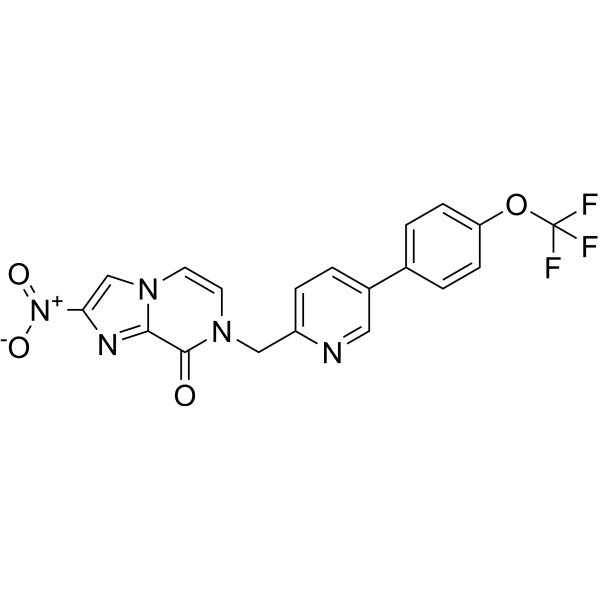 0 ImagesCat. No.: HY-151484CAS No.: 2738381-52-5Anti-infective agent 4 (compound 73) is an orally active inhibitor of Trypanosoma cruzi with an IC50 value of 0.016 μM. Anti-infective agent 4 effectively reduces parasite burden in vivo. Anti-infective agent 4 can be used for the research of infection.

-
Antimalarial agent 35
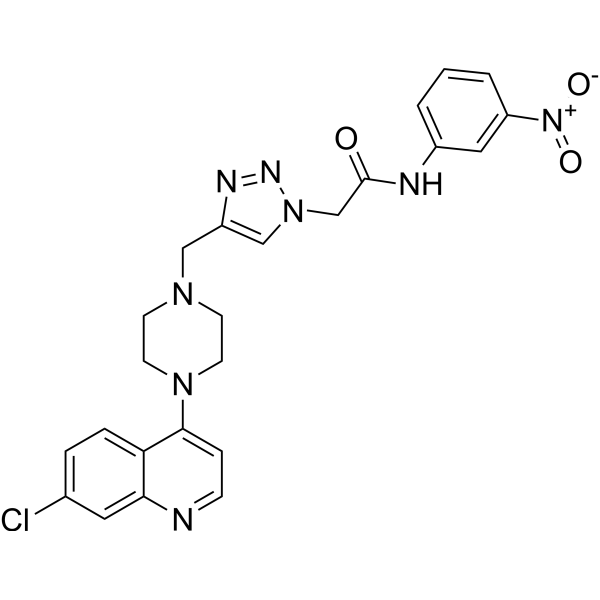 0 ImagesCat. No.: HY-163070CAS No.: 3054155-49-3Antimalarial agent 35 (compound QP11) is a selective inhibitor FP2. Antimalarial agent 35 has antimalarial activity and shows synergistic effects when combined with chloroquine(HY-17589A).
-
Desethyl chloroquine-d5
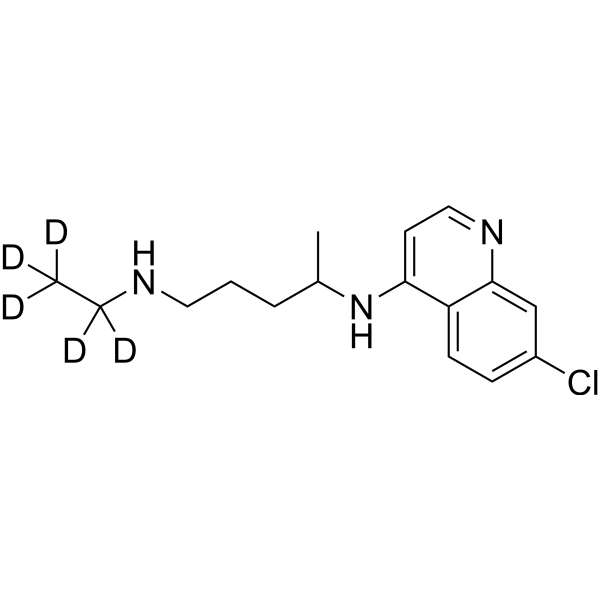 0 ImagesCat. No.: HY-135811S1CAS No.: 1261392-69-1Desethyl chloroquine-d5 is deuterium labeled Desethyl chloroquine. Desethyl chloroquine is a major desethyl metabolite of Chloroquine. Chloroquine diphosphate is an inhibitor of autophagy and toll-like receptors (TLRs). Desethyl chloroquine possesses antiplasmodic activity.
-
Permethrin-d9
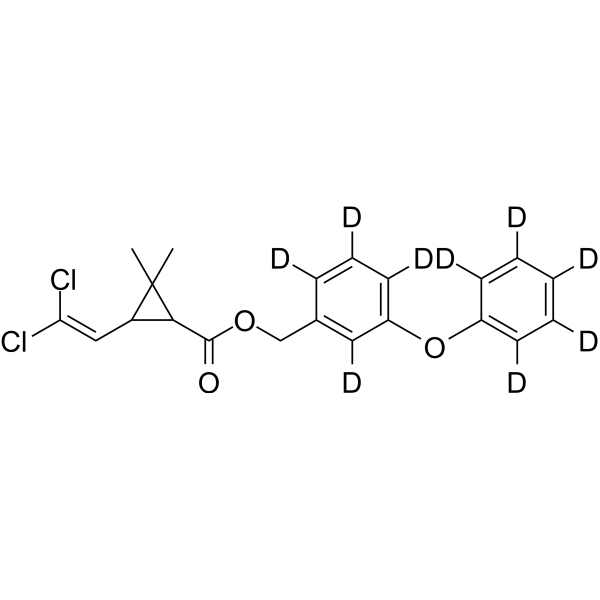 0 ImagesCat. No.: HY-B0887S1Synonyms: NRDC-143-d9Permethrin-d9 is the deuterium labeled Permethrin. Permethrin (NRDC-143) is an insecticide, acaricide, and insect repellent; functions as a neurotoxin, affecting neuron membranes by prolonging sodium channel activation.

-
(-)-Fucose-13C-2
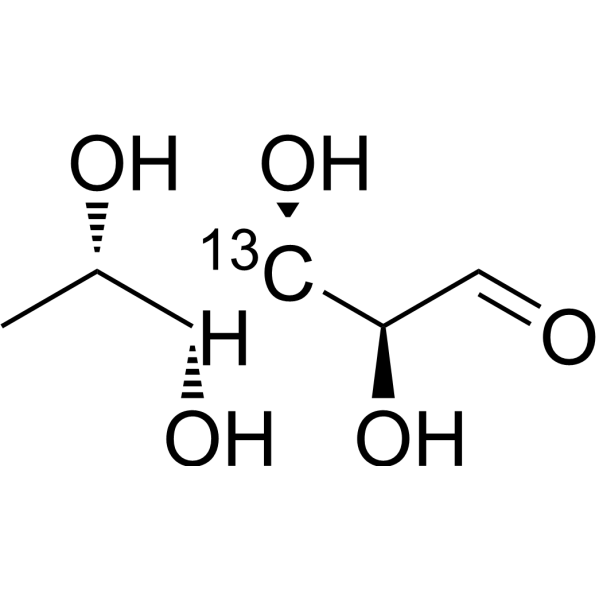 0 ImagesCat. No.: HY-N1480S2CAS No.: 478518-50-2Synonyms: 6-Desoxygalactose-13C-2; L-(-)-Fucose-13C-2; L-Galactomethylose-13C-2(-)-Fucose-13C-2 is the 13C labeled (-)-Fucose. (-)-Fucose is classified as a member of the hexoses, plays a role in A and B blood group antigen substructure determination, selectin-mediated leukocyte-endothelial adhesion, and host-microbe interacti[
-
Walsuronoid B
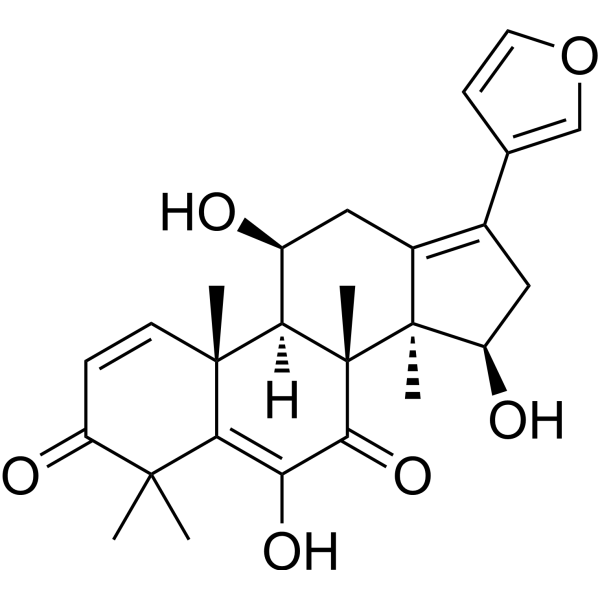 0 ImagesCat. No.: HY-N1075CAS No.: 942582-15-2Walsuronoid B is a limonoid can be isolated from Walsura robusta and has weak antimalarial activity.
-
mCMQ069
 0 ImagesCat. No.: HY-162696CAS No.: 3025257-02-4mCMQ069 is an orally active and potent antimalarial. mCMQ069 has potential for a single-dose cure and/or 28-day chemoprevention.
-
Nifursol-15N2,d2
 0 ImagesCat. No.: HY-W777922CAS No.: 1246833-64-6Nifursol-15N2,d2 is the deuterium and 15N-labeled Nifursol (HY-B1703). Nifursol is an orally active veterinary antibiotic. Nifursol inhibits Histomonas meleagridis. Nifursol prevents histomoniasis in turkeys. Nifursol is widely used in studies of Escherichia coli gastroenteritis in Salmonella-infected poultry and aquatic animals.
-
Insecticidal agent 16
 0 ImagesCat. No.: HY-168570CAS No.: 3046365-94-7Insecticidal agent 16 (compound A21) is a potent insecticidal agent. Insecticidal agent 16 shows insecticidal activities against Plutella xylostella and Spodoptera frugiperda with LC50 values of 1.2 and 13.2 µg/mL, respectively.
-
Melarsomine
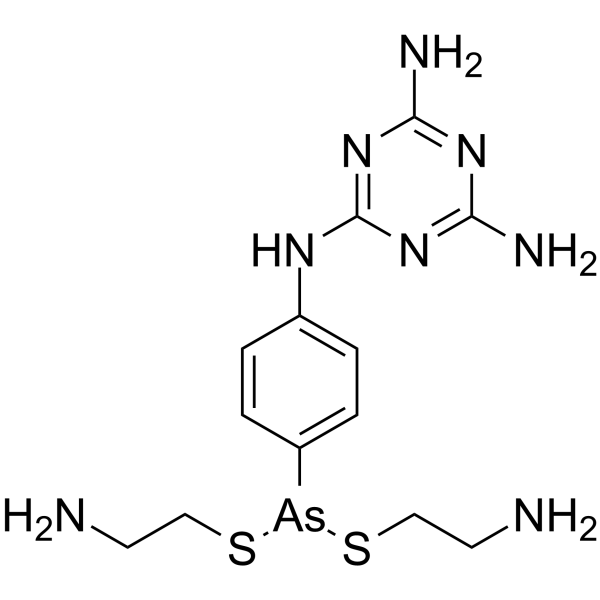 0 ImagesCat. No.: HY-138502CAS No.: 128470-15-5Melarsomine is a trivalent arsenical compound used as an adulticide. Melarsomine can be used for the reserach of canine heartworm disease and other helminth infections.
-
PMX464
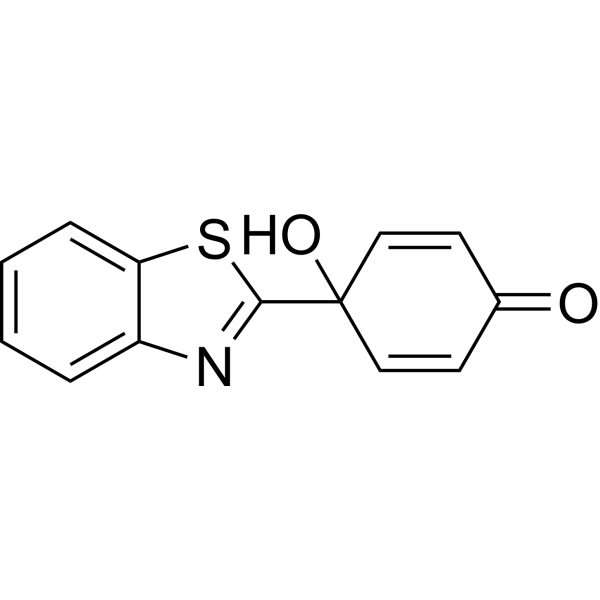 0 ImagesCat. No.: HY-108534CAS No.: 485842-97-5Synonyms: AW 464PMX464 (AW 464) is a thiol-reactive quinol compound and an inhibitor of the thioredoxin-thioredoxin reductase (Trx/TrxR) system, with an IC50 value of 6.5 μM against TrxR. PMX464 acts by irreversibly inhibiting the thioredoxin (Trx-1) system, blocking HIF-1α transcriptional activation and the NF-κB inflammatory pathway, inducing apoptosis, attenuating platelet function and inhibiting thrombosis, and specifically disrupting the trypanothione antioxidant metabolic network in parasites. PMX464 is used in research concerning malignant tumors (colorectal cancer, breast cancer, renal cancer, and leukemia), pulmonary inflammation, African sleeping sickness, and antithrombotic applications.
-
ELQ-121
 0 ImagesCat. No.: HY-174343CAS No.: 1228283-36-0ELQ-121 is a potent inhibitor of the ubiquinol-oxidation (QO)-site of parasites. ELQ-121 has IC50 of 0.05 nM against chloroquine sensitive and multidrug resistant P. falciparum in vitro. ELQ-121 inhibits T. gondii and N. caninum with IC50 below 1 nM in vitro. ELQ-121 suppresses B. besnoiti tachyzoite proliferation with an IC50 of 0.49 nM and induces mitochondrial disruption. ELQ-121 can form polyethylene glycol carbonate ester prodrug which demonstrates in vivo efficacy against P. yoelii in mice. ELQ-121 is suitable for antimalarial research.
-
Lumefantrine-d18
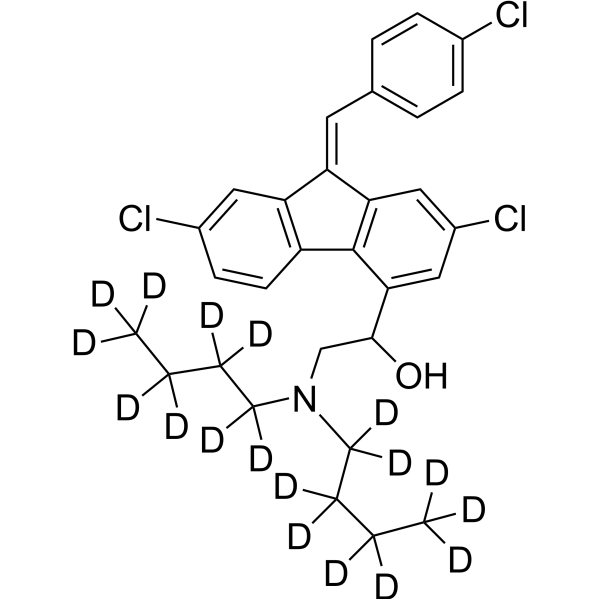 0 ImagesCat. No.: HY-B0803SCAS No.: 1185240-53-2Synonyms: Benflumetol-d18Lumefantrine-d18 is the deuterium labeled Lumefantrine, which is an antimalarial agent.
-
Vanillyl butyl ether (Standard)
 0 ImagesProtoporphyrin IX (Standard) is the analytical standard of Protoporphyrin IX. This product is intended for research and analytical applications. Protoporphyrin IX is a final intermediate in the heme biosynthetic pathway, which acts as a radiation sensitizer enhancing ROS generation even in a hypoxic state and inducing DNA damage. Protoporphyrin IX also acts as a photo sensitizer undergoing photobleaching that occurs through direct degradation by light irradiation. Protoporphyrin IX is formed and accumulated following 5-aminolevulinic acid (5-ALA) (HY-W000450) administration in the tumor cells of rats. Protoporphyrin IX causes selective improvement of basal cell carcinoma when activated red fluorescence of a peak wavelength at 405 nm. Protoporphyrin IX is promising for research of sonodynamic and photodynamic agents for a wide range of cancers, such as bladder cancer and nodular basal cell carcinoma.
-
DNDI-0690
 0 ImagesCat. No.: HY-156132CAS No.: 2097881-13-3DNDI-0690 is a potent orally active analogue of DNDI-VL-2098, exhibiting potent activity against cutaneous leishmaniasis (CL). DNDI-0690 shows potent in vitro activity against CL-causing Leishmania species (EC50 = 0.17 μM against visceral leishmaniasis (VL), and < 5 μM against CL-causing species). DNDI-0690 exerts effects in a mouse model of L. major CL. DNDI-0690 can be used for CL research.
-
Dinitolmide (Standard)
 0 ImagesDinitolmide (Zoalene) (Standard) is the analytical standard of Dinitolmide (HY-B1004). This product is intended for research and analytical applications. Dinitolmide is an orally active anticoccidial agent used as a fodder additive. Dinitolmide has a wide anticoccidial spectrum with no effect on host immunity. Dinitolmide mainly acts on the first generation merozoite stage of coccidia and also has an inhibitory effect on the sporulation process of oocysts. Dinitolmide has anti-Toxoplasma gondii effect in vitro with an EC50 of 3.625 μg/mL. Dinitolmide can be used to inhibits infections caused by Eimeria tenella.



